Solar panel maintenance basics for property owners and facility teams
Solar panel maintenance focuses on safe access, visual inspection, performance monitoring, cleaning decisions, vegetation or shading control, electrical checks by qualified personnel, and documentation. Most property owners should manage routine observation and records while leaving electrical testing and repair to qualified solar professionals.
Solar Maintenance Snapshot
TL;DR: Solar PV systems are not maintenance-free. They need periodic inspection, performance review, debris and shade management, roof coordination, and clear rules for who may touch electrical components.
What maintenance is meant to protect
Solar photovoltaic systems are installed to produce electricity over a long service period. Maintenance protects safety, production, warranty requirements, roof conditions, and asset value. It also helps owners notice small issues before they become outages or water-intrusion problems.
The U.S. Department of Energy notes that solar arrays require operations and maintenance after installation to function properly and meet energy production targets over the system life. NREL's best-practices guide for PV and energy storage O&M provides a deeper technical reference for owners, operators, and service providers.
Facility teams that already use mobile work orders and photo documentation in the field can apply similar habits to solar maintenance: date, location, condition, photo, action, and follow-up.
Basic maintenance areas
| Maintenance area | What to look for | Who should handle it |
|---|---|---|
| Visual module condition | Broken glass, discoloration, debris, obvious damage | Trained facility observer or solar provider |
| Production monitoring | Unexpected drop in output or inverter alerts | Facility team and solar service provider |
| Cleaning need | Soiling, bird debris, pollen, dust, nearby work residue | Based on site conditions and manufacturer guidance |
| Roof and drainage | Ponding, membrane damage, clogged drains, ballast movement | Roofing and solar-qualified teams as appropriate |
| Vegetation and shading | New shade from trees, rooftop equipment, or nearby changes | Facility or landscape team with solar review |
| Electrical testing | Insulation, voltage, current, grounding, terminations | Qualified electrical or solar professionals |
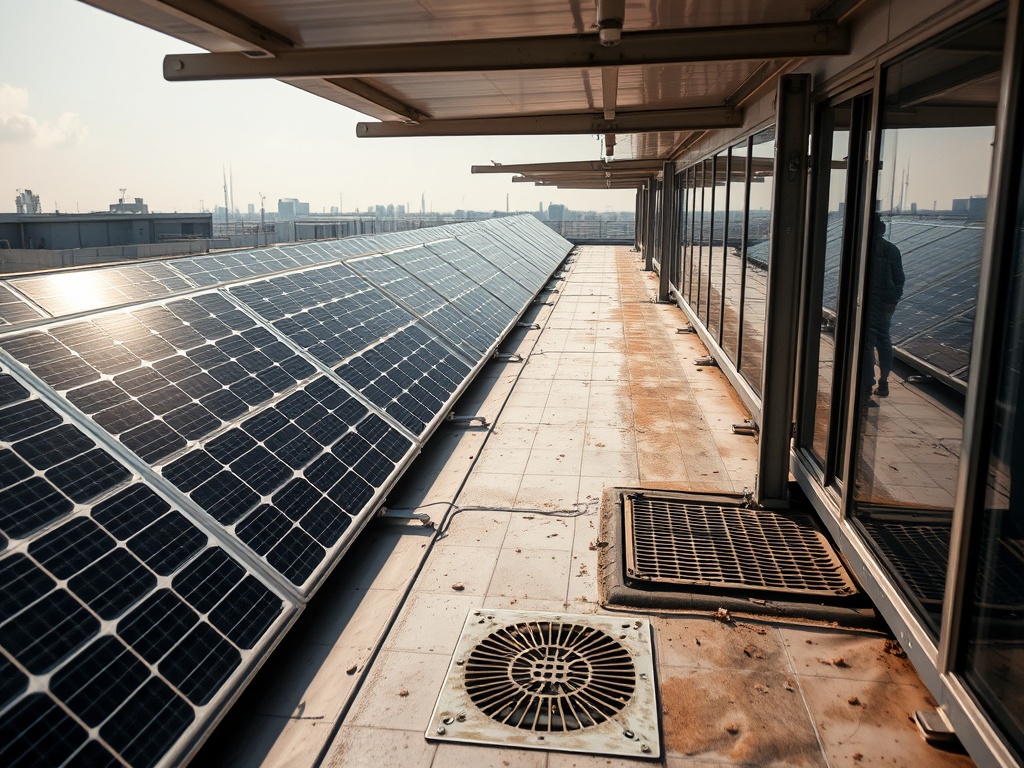
The maintenance plan should define what in-house staff may do. Looking for debris from a walkway is different from opening combiner boxes, disconnects, or inverter cabinets. Electrical work must follow applicable codes, safety procedures, and qualification requirements.
Cleaning: not automatic, not ignored
Owners often ask how often panels should be cleaned. There is no universal answer. Rainfall, dust, pollen, bird activity, agricultural residue, wildfire smoke, nearby construction, roof slope, module tilt, and safety access all affect the decision. In some locations, cleaning may be occasional. In others, soiling may justify a planned schedule.
Cleaning should follow manufacturer and installer guidance. Harsh methods can damage modules, coatings, wiring, seals, or roof surfaces. Facility teams should also consider water quality, fall protection, electrical safety, and roof warranty requirements before authorizing cleaning work.
PNNL's solar PV best-practice overview emphasizes maintenance requirements and reporting to keep systems operating safely and efficiently. Reporting is often overlooked, but it is how owners learn whether maintenance actions actually improved performance.
Roof coordination matters
Rooftop solar maintenance is not only about panels. The system interacts with roof membranes, flashings, ballast, penetrations, drains, walk pads, access paths, and equipment clearances. A solar service visit can damage a roof if access is not planned. A roof repair can damage a solar system if electrical and mounting conditions are ignored.
For owners managing concrete pads, equipment supports, or rooftop access routes, what causes concrete cracking and how to minimize it offers a useful reminder that supports and walking surfaces should be inspected as part of the broader facility, not in isolation.
Warning signs that need professional review
Escalate issues when you see:
- Broken or shattered modules.
- Burn marks, melted connectors, or unusual odor.
- Repeated inverter faults.
- Sudden production drop not explained by weather or outages.
- Loose wiring, exposed conductors, or damaged conduit.
- Roof leaks near mounts, ballast, or penetrations.
- Standing water affecting electrical or roof components.
- Evidence of animals nesting under arrays.
Do not attempt electrical repair unless qualified and authorized. Solar PV systems can remain energized under light, and safe isolation requires proper procedures.
A simple seasonal checklist
A basic owner-side checklist can include:
- Review production data for unusual changes.
- Walk accessible areas using approved roof safety procedures.
- Check for debris, shading, and visible module damage.
- Confirm drains, access paths, and walk pads are clear.
- Record photos of notable conditions.
- Submit service requests for electrical, inverter, mounting, or roof concerns.
- Review open issues after severe weather.
This checklist does not replace professional inspection. It helps owners notice and communicate conditions earlier. Owners should also keep solar maintenance coordinated with roofing warranties, tenant access rules, and emergency plans. Fire, storm, and utility shutdown procedures should identify who can isolate the system and who should be contacted after damage or abnormal operation.
For portfolios, consistency is more valuable than a perfect one-time inspection. Use the same inspection categories across buildings, note inverter or meter alerts in the same format, and keep photos tied to array sections or roof zones. That makes it easier to compare conditions after storms, roof work, nearby construction, or seasonal changes. It also gives outside solar contractors a clearer starting point when they arrive on site. Keep warranty terms, monitoring logins, shutdown procedures, roof access rules, and service contacts in the same asset record so a facility manager is not searching through email during an outage. A clean record also helps new staff inherit the system without losing context, especially when the original installer, property manager, or commissioning lead is no longer involved. That continuity is part of maintenance resilience and safer operations across the full system life after turnover and recommissioning reviews over time.
A Solar Maintenance Rhythm That Protects Access and Performance
Solar maintenance works best as a rhythm: periodic observation, performance review, roof coordination, professional electrical service, and clear records. Owners do not need to become solar technicians, but they do need a system for noticing change and routing work.
Equipment and access planning also connect to when to rent construction equipment instead of buying because lifts, roof access systems, cleaning tools, and inspection equipment should match the frequency and risk of the work.
Informational note: This article is educational only and does not provide electrical, solar design, roofing, safety, legal, warranty, compliance, or project management advice. PV inspection, testing, and repair should be performed by qualified professionals under applicable requirements.