What causes concrete cracking and how to minimize it
Concrete cracks because it changes volume, loses moisture, carries loads, responds to temperature, and is restrained by its surroundings. Cracking cannot be eliminated in every case, but good design, mix control, placement, curing, jointing, and maintenance can reduce unwanted cracking and manage where movement occurs.
Concrete Crack-Control Snapshot
TL;DR: Most crack control starts before the pour. Plan joints, subgrade support, reinforcement placement, curing, weather protection, and load timing so concrete movement is expected rather than treated as a surprise.
Why concrete cracks even when work looks careful
Concrete is strong in compression, but it is not immune to movement. As it dries, cools, hydrates, or carries loads, stresses can build. If those stresses exceed the concrete's tensile capacity at a location, a crack may form. Some cracks are mostly cosmetic. Others may indicate durability, moisture, structural, or movement concerns that need professional review.
The American Concrete Institute's crack-control guidance explains that drying shrinkage, long-term effects, and construction procedures all play roles in crack behavior. That is why crack prevention is not one step. It is a system.
When teams document cracking through mobile work orders and photo documentation in the field, the photos should show scale, location, pattern, and context. A close-up alone rarely tells the whole story.
Common causes and what they usually mean
| Cause | What happens | Common control strategy |
|---|---|---|
| Plastic shrinkage | Surface dries before concrete sets | Wind control, fogging, evaporation management, prompt curing |
| Drying shrinkage | Hardened concrete contracts as moisture leaves | Joint planning, curing, mix design, reinforcement details |
| Settlement | Concrete settles around reinforcement or changes in section | Proper consolidation and placement practice |
| Thermal movement | Temperature differences create stress | Temperature planning, mass concrete controls where needed |
| Restraint | Slab, wall, or element cannot move freely | Joint layout and detailing |
| Overload or movement | Loads or support conditions exceed assumptions | Engineering review and load control |
The National Ready Mixed Concrete Association's guidance on plastic shrinkage cracking notes that high evaporation can dry the concrete surface before it sets. This is why hot, dry, windy, or low-humidity conditions deserve special planning. Waiting until cracks appear is too late.
Mix, water, and finishing decisions
Adding water at the jobsite may make concrete easier to place, but it can also affect strength, shrinkage, surface quality, and durability when not controlled by the specification and supplier guidance. Finishers may ask for workability, but uncontrolled water addition is a common risk.
Finishing timing matters as well. Closing the surface too early, overworking bleed water, or applying inappropriate finishing methods can contribute to surface defects. The right method depends on slab use, weather, mix design, and specification requirements.
Curing is another major control. Curing helps maintain moisture and temperature conditions so concrete can develop desired properties. NRMCA guidance on cracking concrete surfaces emphasizes curing as an important step for durable, crack-resistant concrete. The exact curing approach should follow project specifications and applicable standards.
Joints do not prevent movement; they manage it
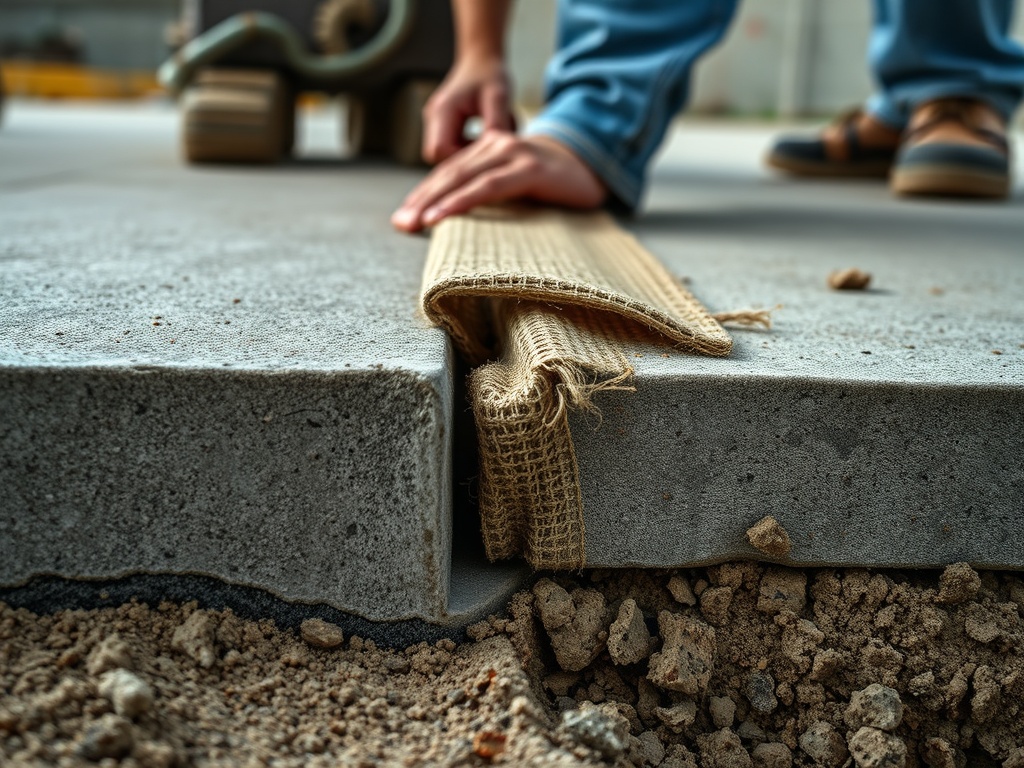
Control joints are often misunderstood. They do not stop concrete from shrinking or moving. They create a planned weakened line where shrinkage cracks are more likely to occur in a controlled pattern. Without a good joint plan, cracks may appear randomly.
Joint spacing, depth, timing, and layout should be based on slab thickness, reinforcement, concrete properties, restraint, openings, corners, columns, and the intended use. Poor joint planning around re-entrant corners, drains, penetrations, and changes in slab shape often leads to visible cracking.
When cracking is already present, the first question should not be, "How do we hide it?" It should be, "What type of crack is this, and is it active, stable, cosmetic, durability-related, or structural?" That distinction determines whether monitoring, sealing, routing, epoxy injection, replacement, drainage correction, or engineering assessment may be appropriate.
How owners and contractors should respond to cracks
A practical crack review includes:
- Location and orientation.
- Width and length.
- Pattern, such as random, map, parallel, corner, or through-joint.
- Timing, including when it appeared after placement.
- Movement evidence, such as widening, offset, leakage, or spalling.
- Exposure conditions, including water, chemicals, freeze-thaw, or traffic.
- Project documents, including specifications, reinforcement, mix records, and curing records.
Owners should be cautious about interpreting cracks from appearance alone. Contractors should avoid dismissing all cracks as normal. The right answer depends on context. A simple monitoring plan can help when a crack is not immediately repaired: mark the ends, record date-stamped photos, measure width with an appropriate gauge, and note moisture or movement. If conditions change, escalate the review rather than relying on the original assumption.
For project teams comparing future repair options, when to rent construction equipment instead of buying may become relevant if saw-cutting, grinding, moisture mitigation, or access equipment is needed only for a limited scope.
Mistakes that increase cracking risk
Common preventable mistakes include placing concrete on poorly prepared subgrade, ignoring weather, delaying curing, cutting joints too late, overloading slabs early, failing to isolate restraints, and treating reinforcement as a cure-all. Reinforcement can help control crack width and distribution, but it does not make concrete crack-proof.
Another mistake is not planning maintenance. Exterior slabs, parking decks, and exposed concrete may need sealant upkeep, drainage control, joint maintenance, and prompt repair of spalls or open cracks that admit water and contaminants. A weather and placement log can also help later review. Record temperature, wind, humidity, delivery timing, finishing conditions, curing start, and joint-cut timing when those details are required by the project. These notes give technical reviewers better context than memory alone.
A Crack-Control Mindset for Better Concrete Work
Concrete cracking is best managed through planning, execution, documentation, and maintenance. The goal is not unrealistic perfection. The goal is to reduce avoidable cracks, guide movement into planned locations, and respond intelligently when cracks appear.
Facility teams that track concrete conditions over time can connect this work to solar panel maintenance basics for property owners and facility teams when rooftop support pads, ballasted systems, walk paths, or concrete-mounted equipment interact with building maintenance.
Informational note: This article is for educational purposes only. It does not provide structural engineering, materials engineering, legal, warranty, compliance, or project management advice. Cracks with movement, leakage, settlement, structural concern, or safety risk should be reviewed by qualified professionals.